
DStv
Reinventing the TV guide
.jpg)
While at Politburo, I was part of the team tasked with helping DStv rethink what a TV guide could be. Together with Eject Media and DStv’s internal editorial and digital teams, we set out to create a smart, personalised playlist platform, one that could help the brand compete with the emerging influence of Netflix and other streaming services
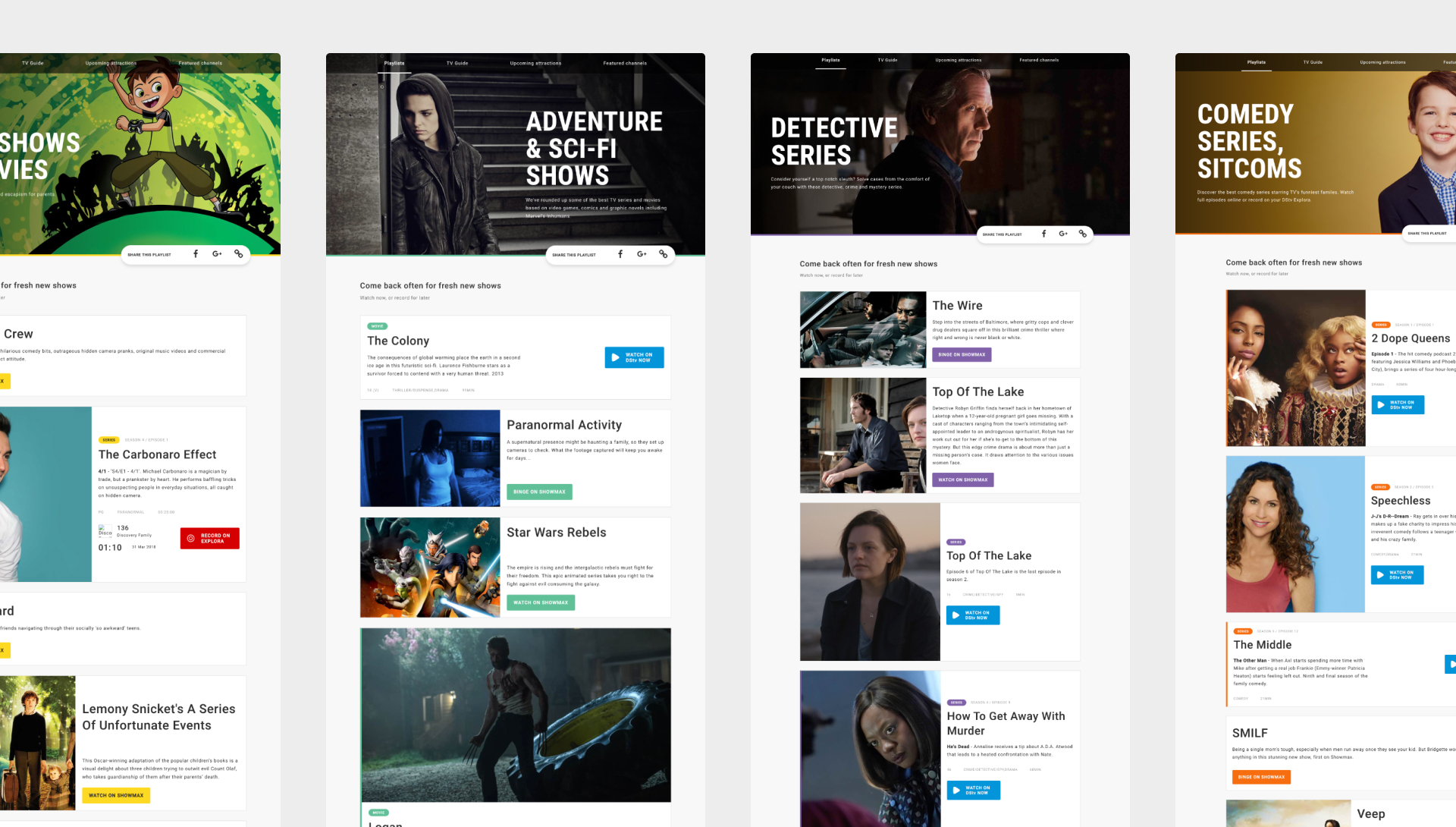
The result was theguide, a mood-based discovery experience designed to make sense of DStv’s vast catalogue of shows and channels by connecting people with what they might actually want to watch, rather than what happened to be on.
The ambition was clear, DStv wanted to move beyond the grid, beyond the traditional electronic program guide and into a space where discovery felt human and intuitive. Phase one relied on curation from the internal editorial team, with the long-term vision of learning from viewer behaviour and adapting recommendations dynamically, much like Netflix’s algorithmic approach. We never reached that second phase, but even in its first iteration, theguide represented a fundamental shift in how DStv thought about content discovery.


Our collaboration was lean and intensely creative. We worked closely with the editorial and content teams to define the logic, structure, and voice of the platform. Playlists were grouped around moods, themes, and cultural moments — replacing the static hierarchy of genres with something more emotional and instinctive. Behind the scenes, we integrated with DStv’s catallgue through a flexible CMS setup that made it easier for internal teams to update, curate and publish new playlists on the fly and without technical intervention.
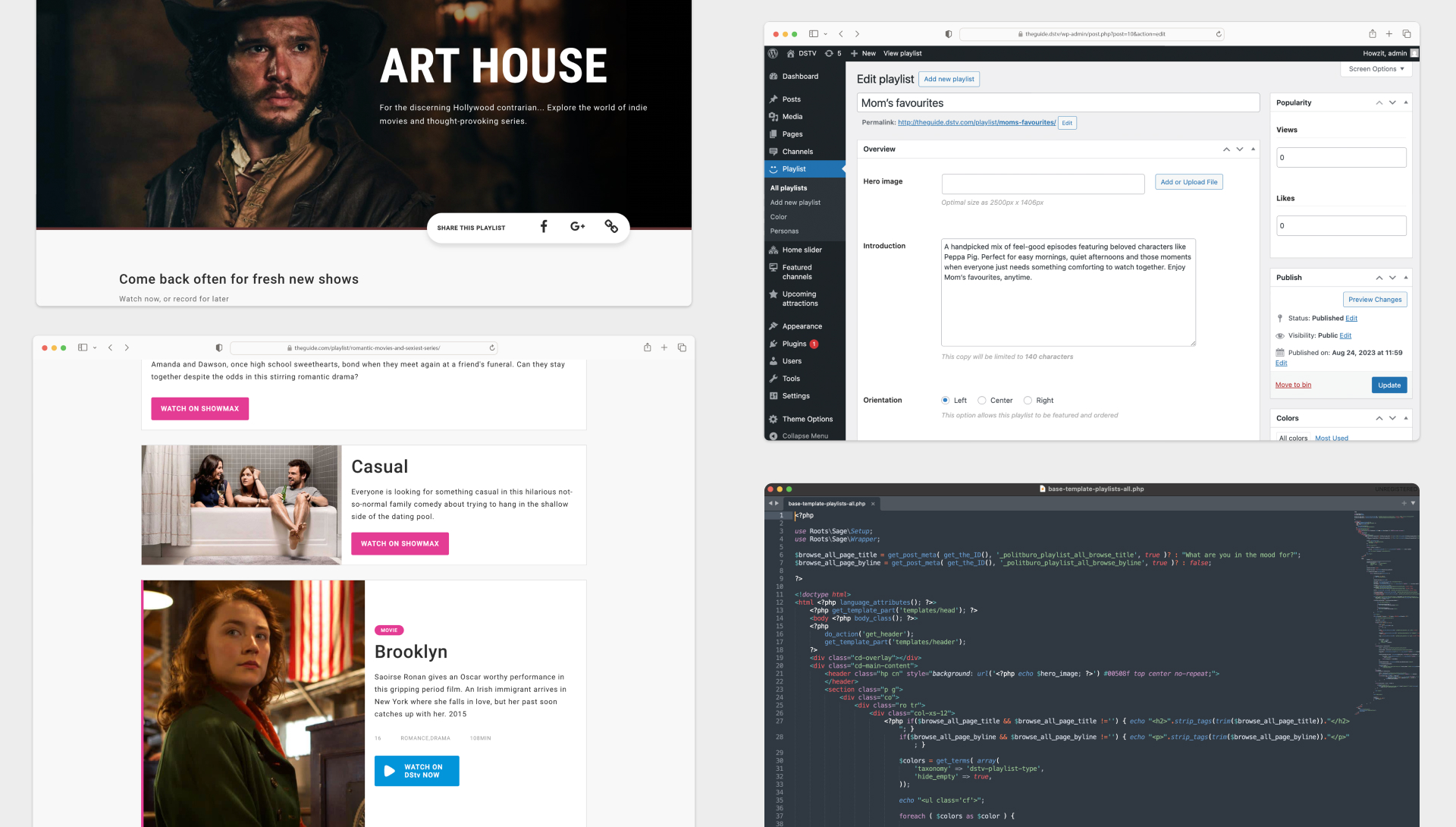
My role focused on the development and design of the digital platform — creating a user experience that felt seamless, responsive and editorially rich. I built the entire web experience, shaping the interface design and front-end development to bring the concept to life. The design language was cinematic and immersive: large-format imagery, layered typography, subtle animation, and a dark palette that echoed the sensibility of streaming platforms but remained distinctively DStv. The aim was to make discovery feel like browsing a beautifully curated magazine rather than navigating a database.
When theguide launched, it stood as DStv’s first step toward a more intelligent and human digital ecosystem. It reframed the brand’s relationship with its own content, shifting the emphasis from quantity to quality, from listings to experiences. While the project never expanded into its planned adaptive phase and was eventually shelved, it succeeded in demonstrating that meaningful personalisation can begin with design and storytelling, not just algorithms.
.jpg)
.jpg)
.jpg)